A planogram is a drawing of how product sits on a wall, a table or a fixture in the store: which styles go where, in what colors, at what quantity and next to what. Buyers use it to decide whether your line will actually sell in the space they have. If you are pitching apparel, accessories or a licensed program to a retailer, the planogram is often the page that turns a "maybe" into an order.
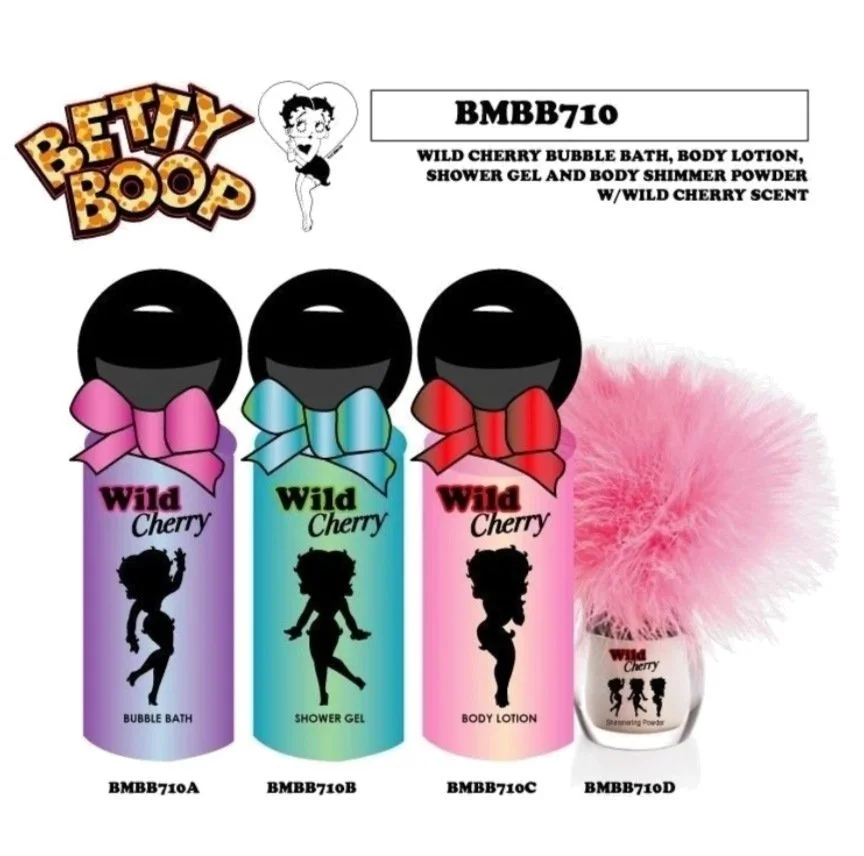
Licensed bath and body packaging from a Betty Boop program: product built to be seen as a set on the shelf.
What a planogram is, and who draws it
At large retailers, the visual merchandising or planning team owns the final planogram for every department. But the first version very often comes from the vendor. When a brand shows up with its own proposed planogram, the buyer does not have to imagine the line on the floor. They can see it, react to it and take it to their planning meeting. That saves the buyer work, and buyers remember the vendors who save them work.
How a buyer turns your line sheet into a floor plan
Your line sheet answers "what is it and what does it cost." The planogram answers "where does it go and how much of it do I need." A buyer reads your line sheet, picks the styles, then has to work out how many facings each style gets, how the colors flow across the fixture and which piece is the hero at eye level. If your presentation already shows that, the conversation moves straight to quantities.
What a vendor planogram should show
The assortment. Every style in the buy, placed on the actual fixture type: wall bay, four-way, table or endcap.
Colorway flow. How colors read from left to right and top to bottom, so the wall looks intentional instead of random.
Price architecture. Opening price points within reach, the key item at eye level, the premium piece where it earns attention.
The hero. One item or set the whole wall is built around, the thing a shopper sees from the aisle.
Packaging on the shelf. For boxed product, gift sets and multipacks, how the packaging faces out and stacks.
On licensed programs, such as the Betty Boop bath and gift sets our studio designed, we deliver the line sheet and the planogram together, so the buyer and the licensor both see the finished set the way a shopper will.
When a smaller brand needs one
You do not need a planogram to sell three styles to a boutique. You do need one when you are pitching a department store, a big-box chain or an off-price retailer, when a buyer asks how the line merchandises, when you are selling a licensed or gift program with packaging, or when you want a wall, table or endcap instead of a few hangers on a rack. Those are the meetings where a planogram signals that you understand retail, not just product.
The mistakes we see most
Too many SKUs. A crowded fixture tells the buyer you have not edited the line. Fewer, stronger styles win the space.
Colors that fight on the wall. Each style can look great on its own and still clash in a row. Plan the color story across the whole fixture.
No hero. If nothing stands out, nothing sells first. Every planogram needs a reason to walk over.
Ignoring the real fixture. A beautiful layout that does not fit the retailer's actual shelves or hardware gets redrawn by someone else, without you.
Where the planogram fits in your pitch
The strongest buyer meetings move in order: the brand story, the line, the line sheet, then the planogram that shows it all working in the store. We build that sequence into our buyer presentations and decks, so the buyer leaves the room already picturing your product on their floor.
Planning a buyer meeting? Book a free 20-minute intro call and we will look at your line the way a buyer will.